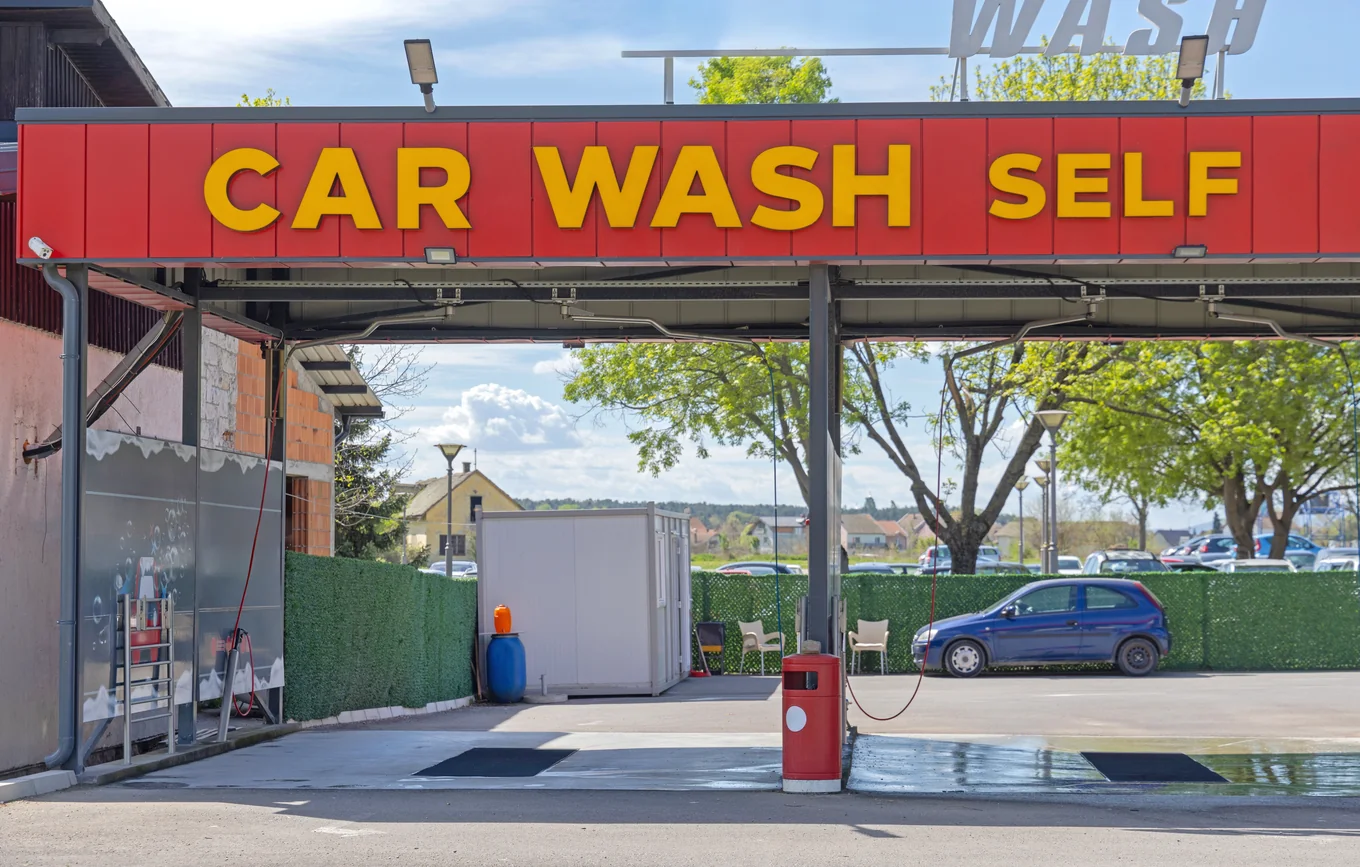
What Self-Service Car Wash Insurance Costs
Premium for a self-service car wash program is driven by a set of
underwriting factors that specialty carriers price independently rather
than applying a single rate to the class. The factors below are the
primary cost drivers — not dollar figures, which vary with the specific
risk, the carrier, and the market cycle.
Bay Count and Site Configuration
Bay count is the most direct driver of exposure. More bays mean more
simultaneous customer interactions, more high-pressure equipment in
service, more vacuum stations, and more coin-operated machinery — all of
which expand the theft, liability, and equipment breakdown exposures that
carriers price. A site that adds IBA bays to a primarily self-service
footprint adds garagekeepers exposure and a different equipment profile
that underwriters assess separately.
Geographic Location and Peril Exposure
Location drives property pricing significantly. A self-service facility
in a hail corridor in north Texas carries different wind and property
rates than a comparable facility in a mild coastal market. Hurricane
wind exposure along the Gulf and Atlantic coasts, earthquake exposure
in California, and tornado risk across the central plains all move
property and equipment breakdown rates. Crime rates in the surrounding
trade area affect the after-hours theft component of the program.
Attended vs. Fully Unattended Operation
Carriers price attended and fully unattended operations differently
for the after-hours crime and slip-and-fall components. A self-service
facility that has a part-time attendant on site during peak hours —
even a few hours per day — provides a measurable deterrence to coin-box
theft and a faster response to a fallen customer. Fully unattended
sites, particularly those open 24 hours, carry the highest crime
and slip-and-fall frequency in the class.
Security Infrastructure
Lighting quality, surveillance camera coverage, alarm monitoring, and
coin-box construction are all underwriting factors that carriers evaluate
during quoting. Operations with well-lit lots, monitored camera systems
covering bay entrances and vacuum islands, and heavy-gauge coin-box
construction typically receive more favorable inland marine and crime
pricing than facilities with minimal security infrastructure. Some
carriers offer formal credits for documented security improvements.
Equipment Age and Condition
The age and maintenance history of pump-and-motor assemblies, meter
boxes, and vacuum stations affect both property and equipment breakdown
pricing. Aging equipment with deferred maintenance carries higher
failure frequency and higher repair cost. Recent equipment replacement
or documented preventive maintenance schedules — including the kind of
weekly and monthly inspection cadence published by industry resources —
are favorable underwriting signals.
Claims History
Loss runs from the prior three to five years are standard underwriting
requirements. A history of coin-box theft claims, slip-and-fall
frequency, or equipment breakdown losses will move pricing upward
regardless of the current physical security posture. Operations with
a clean loss history and documented security improvements after prior
claims typically have the strongest negotiating position with
specialty carriers.
Cash Handling Practices
How often cash is swept from coin boxes and how it is transported
affects the inland marine and crime pricing. Operations that allow
cash to accumulate over multiple days carry a higher theft exposure
than those that empty coin mechanisms daily or use card-only payment
systems that eliminate physical currency from the site entirely.
The shift toward card-only self-service payment has reduced coin-box
theft exposure at some facilities; underwriters recognize this
and price accordingly.