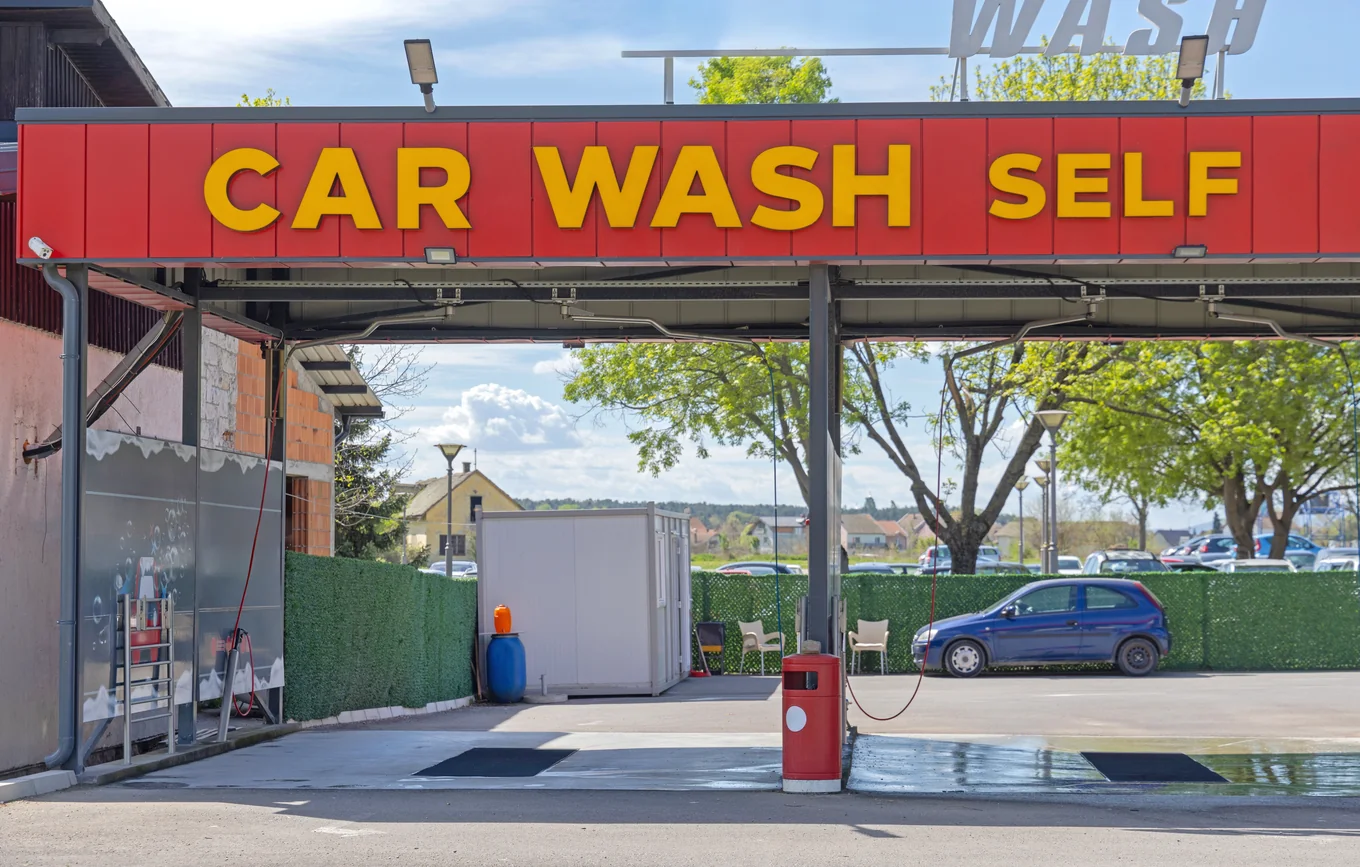
Common Car Wash Risks in Rhode Island
Rhode Island’s geography packs a disproportionate range of risk
exposures into its compact footprint. Narragansett Bay salt-air coastal
exposure, nor’easter snow loads and freeze-thaw cycling, Atlantic
hurricane wind, seasonal tourist-vehicle surges in Newport and South County,
urban coin-theft exposure in the Providence core, and RI DEM stormwater
enforcement along the Bay watershed together form a risk profile that rewards
working with a specialist.
Nor’easter snow loads and winter freeze on canopies and equipment
Rhode Island lies directly in the nor’easter track, and these storms
deliver heavy, wet snow that accumulates rapidly on canopy structures and
equipment-enclosure roofs across the state. Snow-load accumulation on
canopies is a structural risk from November through March throughout Providence
County and inland Kent County. Rapid temperature cycling — above
freezing during a storm, then well below overnight — drives ice damming
and freeze-thaw fatigue on exposed water lines and reclaim-system holding
tanks that lack adequate heat tracing. Equipment breakdown claims in New England
states peak in late winter precisely because of this combination.
Narragansett Bay and Atlantic coastal salt-air corrosion
Rhode Island’s shoreline along Narragansett Bay and the Atlantic coast
exposes car wash facilities in Newport, South County, Warwick, and the East
Bay to persistent salt-laden air that accelerates corrosion on metal conveyor
components, electrical conduit, vacuum tower hardware, dryer mounting structures,
and canopy steel at rates above inland properties. Equipment breakdown and
property carriers underwriting coastal Rhode Island facilities factor
construction material, proximity to salt-air exposure, and maintenance history
into their pricing and appetite decisions.
Atlantic hurricane and tropical storm wind and surge
Rhode Island’s Atlantic coastal position — particularly the open
ocean exposure of Newport, Narragansett, and Westerly — makes the state
vulnerable to both direct hurricane landfalls and brush events from storms
tracking up the Eastern Seaboard. The 1938 New England Hurricane reshaped
the state’s coastal geography and remains the actuarial anchor for
Rhode Island coastal property pricing. Canopy structures, signage, and vacuum
towers are the highest-frequency wind-claim categories at coastal facilities
during named-storm events. Named-storm deductibles are an active underwriting
conversation for operators in the coastal corridor.
Vacuum-coin theft and property crime in Providence urban markets
Dense urban Rhode Island markets — Providence, Pawtucket, and
Woonsocket — carry elevated exposure for coin-box theft, vandalism,
and overnight break-ins at self-service and unattended express exterior
locations. Vacuum-station coin vaults are a frequent target in high-density
urban markets. The money-and-securities sublimit on a property policy is the
relevant coverage line, and owners of multi-location unattended operations
should confirm the crime sublimit reflects actual vault capacity.
RI DEM stormwater enforcement and Narragansett Bay watershed discharge
Rhode Island’s dense river network feeding Narragansett Bay —
the Blackstone, Pawtuxet, Woonasquatucket, and Moshassuck rivers — and
the state’s active RI DEM enforcement posture on industrial stormwater
create a meaningful pollution liability exposure for car wash facilities whose
reclaim systems are undersized, improperly maintained, or overwhelmed during
high-volume wash events. A reclaim overflow or improper discharge that reaches
a storm drain feeding a Bay tributary can trigger RI DEM enforcement action
and third-party environmental claims not covered under standard commercial lines.
Seasonal traffic and summer surge in Newport and South County
Newport and South County car washes experience a pronounced summer demand
surge driven by tourism, sailing events, and Atlantic beach traffic that can
multiply wash volume several times over the off-season baseline. High-throughput
periods during summer operate equipment systems at maximum frequency,
increasing garagekeepers claim opportunity per operational hour and accelerating
equipment wear. Business income calculations for facilities in these seasonal
markets must reflect the peak-period revenue concentration, not just an
averaged annual figure.