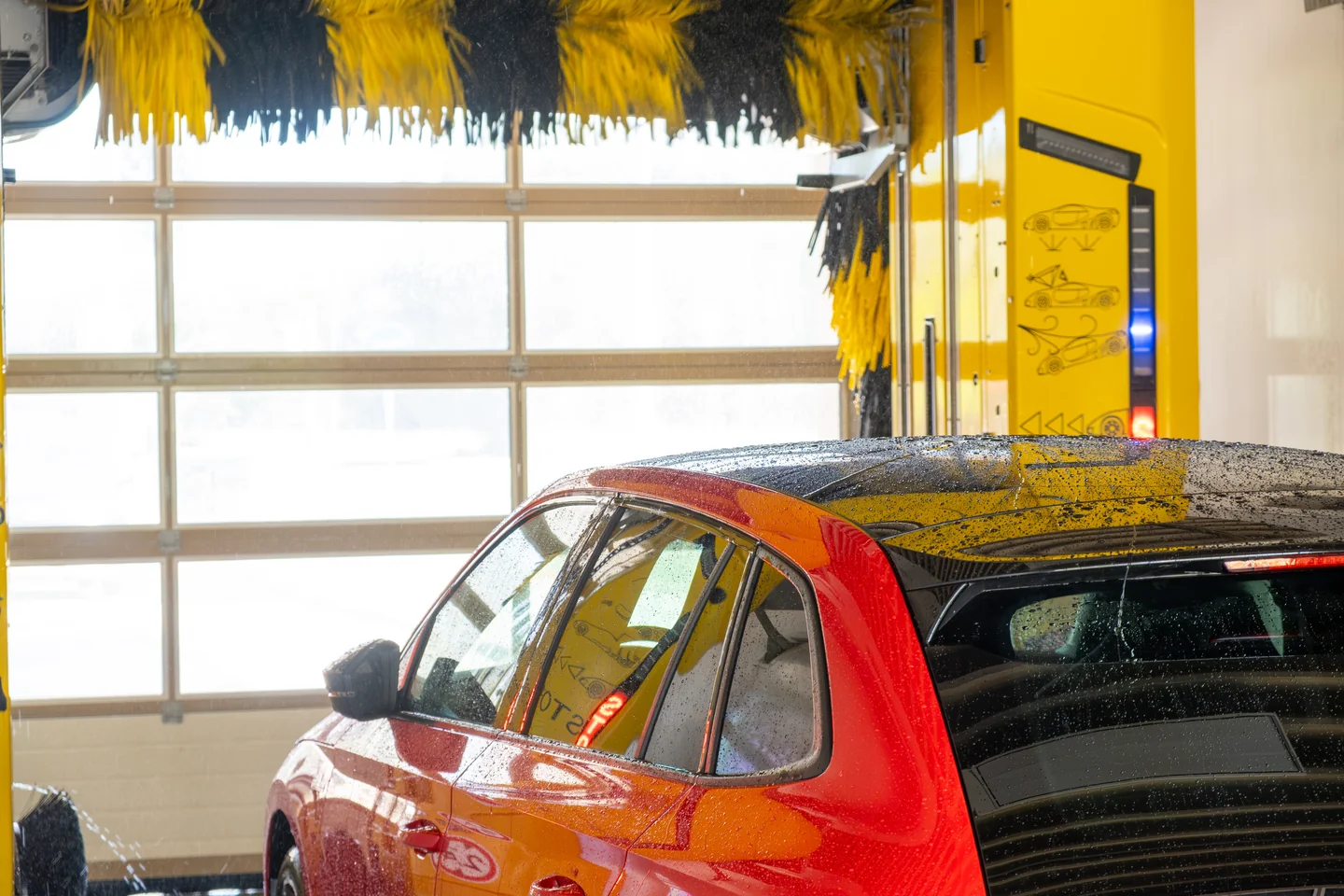
Common Car Wash Risks in Michigan
Michigan’s combination of automotive-industry legacy, heavy winter-road-salt
application, Great Lakes shoreline lake-effect snow, and Great Lakes watershed
environmental sensitivity creates a risk profile unlike any other state in the
specialty car wash market. Understanding these risks is the first step to building
a program that actually covers them.
Road-Salt Corrosion — the Worst in the Country
Michigan applies more road salt per lane-mile than nearly any comparable northern
state, and the result is an environment where car wash conveyors, reclaim systems,
boom arms, and chemical-dosing components corrode at an accelerated rate. Conveyor
chain guides, stainless fittings, and reclaim pump housings that would last many
years in a lower-salt state routinely require early replacement in Michigan markets.
This drives both equipment-breakdown claim frequency and property replacement costs
above national averages — a distinction that carriers familiar with the Michigan
market price into their rates, and that generic commercial carriers often miss until
the first claim.
Freeze-Rupture and Lake-Effect Snow
The western shoreline of Michigan — from South Haven north through Traverse City
and into the Upper Peninsula — sits in one of the most active lake-effect snow
corridors in North America, fed by Lake Michigan’s thermal mass. Multi-day cold
snaps following lake-effect events push temperatures to levels that burst reclaim
tanks, rupture chemical lines, and crack pump housings if heat-trace and
winterization procedures are not rigorously maintained. Even in the Detroit metro
and Lansing, hard overnight freezes following warm days create freeze-thaw stress
cycles that accelerate pipe fatigue. Business income loss following a freeze
rupture in Michigan is typically longer than in comparable markets because qualified
equipment technicians may have multiple simultaneous service calls across the region.
Severe Weather — Tornadoes and Hail
The southern Lower Peninsula of Michigan sits within a tornado-active corridor that
extends from the Ohio and Indiana borders north through the Kalamazoo-Lansing-Detroit
axis. Tunnel wash canopies and overhead door structures are vulnerable to tornado
wind events; repair timelines can extend to several weeks depending on parts
availability. Hail events in the late spring and early summer across southwest and
southeast Michigan can produce meaningful property claims on canopy structures,
bay roofs, and signage.
Pollution Liability into Great Lakes Watersheds
All of Michigan’s Lower Peninsula and most of the Upper Peninsula drain into the
Great Lakes watershed — one of the most sensitive freshwater ecosystems in the
world. EGLE’s enforcement posture reflects that sensitivity, and an uncontrolled
discharge of wash chemistry from a failed reclaim system can quickly escalate from
a local municipal compliance issue to a state-level enforcement matter with
significant cleanup cost implications. Standard commercial general liability
policies exclude pollution — operators without a pollution liability endorsement
or stand-alone policy are exposed.
Vacuum and Coin-Box Theft in Urban Markets
Detroit metro, Flint, Saginaw, and other urban Michigan markets see above-average
coin-box and credit-card reader theft at unattended self-service car washes. Forced
entry into vacuum coin boxes, skimmer installation on card readers, and overnight
break-ins targeting cash-heavy equipment are recurring crime exposures. Property
coverage for coin-operated equipment requires specific valuation language; standard
property forms may cap coin-and-currency losses below the operator’s actual exposure.
Garagekeepers — Disputed Pre-Existing Salt Damage
The single most contentious claim category in the Michigan car wash market is
disputed pre-existing salt damage to customer vehicles. A customer whose vehicle
already has salt-weakened paint, corroded trim, or a failing clear coat may
attribute any new damage observed after the wash to the car wash equipment. Without
vehicle-condition documentation at point of entry — and a garagekeepers policy that
clearly defines the coverage trigger — operators face a recurring low-severity but
high-frequency claim pattern that can jeopardize renewal terms.