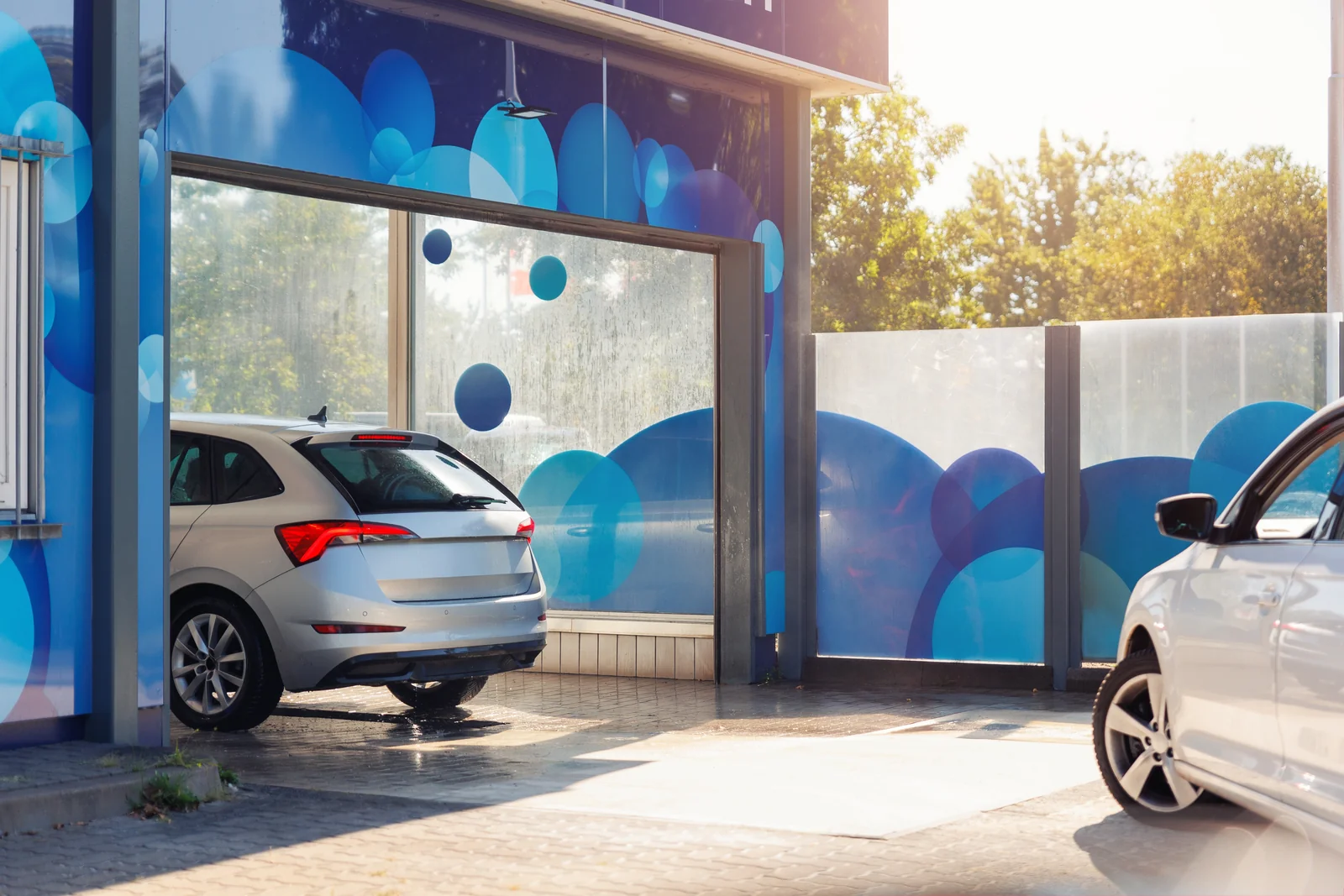
Common Car Wash Risks in Maryland
Maryland’s geography — a dense DC-suburban ring, a major Atlantic
port city, an extensive tidal watershed, and a coastal barrier-island Eastern
Shore — creates a varied risk landscape for car wash operators that spans
winter freeze, coastal storm surge, environmental regulation, and urban crime
exposure.
Winter Freeze and Road-Salt Damage: BWI Corridor and DC Suburbs
The Baltimore-Washington International (BWI) corridor and the DC-suburban
counties of Montgomery, Prince George’s, and Howard receive aggressive
road-salt and brine pre-treatment from November through March. Salt-laden
vehicles concentrate brine on conveyor tracks, brush shafts, pump housings,
and reclaim tanks — accelerating corrosion and shortening equipment
life. Pipe freeze and burst risk in outdoor reclaim vaults and above-grade
plumbing runs is meaningful in Maryland’s mid-Atlantic winter, and
equipment breakdown frequency is elevated during the January-February cold
pocket. Specialty carriers writing Maryland car wash property ask about
equipment age, maintenance cycles, and freeze-protection measures for
outdoor components.
Chesapeake Bay Watershed Pollution Liability
Maryland sits almost entirely within the Chesapeake Bay watershed —
the most heavily regulated estuary system on the East Coast. Car wash runoff
containing degreasers, surfactants, wash chemistry, and road-grit-laden
water entering storm drains connected to Bay tributaries creates pollution
liability exposure that MDE actively enforces. Tunnel operations near the
Bay’s major Maryland tributaries — the Patuxent, Severn, South,
Patapsco, and Chester rivers — carry third-party pollution liability
exposure in the event of a permit exceedance, reclaim system failure, or
accidental discharge. The Insurance Information Institute and the International Carwash Association both identify environmental liability as an underappreciated exposure for
high-volume wash operators near regulated waterways.
Baltimore Inner Harbor and Sparrows Point Legacy Contamination
The Baltimore Inner Harbor and the former Bethlehem Steel Sparrows Point
site represent significant legacy industrial contamination on the Patapsco
River. Car wash acquisitions in the I-95 Baltimore metro — particularly
in South Baltimore, Dundalk, and Essex — involve elevated environmental
due-diligence questions. Specialty carriers ask about prior site use, Phase I
and Phase II environmental assessments, and proximity to recorded contaminated
sites when underwriting Baltimore industrial-corridor car wash risks.
Pollution liability for new-acquisition tunnel operations in this corridor
is priced and structured differently than for greenfield suburban Maryland sites.
Atlantic Coastal Storm Surge: Eastern Shore and Ocean City
Maryland’s Eastern Shore — particularly Worcester County and the
Ocean City barrier island — sits in a named-storm wind and Atlantic
coastal storm surge zone. Car wash facilities in Ocean City and Salisbury
face hurricane wind exposure from storms tracking northward along the
Mid-Atlantic coast, and low-lying Eastern Shore properties near tidal
inlets carry storm surge and flooding risk during major named-storm events.
Commercial property carriers writing Eastern Shore Maryland car wash risks
typically apply named-storm wind deductibles and ask about flood zone status
and tidal elevation for Coastal Plain sites.
DC Commuter-Corridor Dense Traffic and Garagekeepers Frequency
The I-270, I-495, and I-95 corridors through Montgomery, Prince George’s,
and Howard counties generate sustained high-volume car wash traffic from the
DC federal and contractor workforce. High daily vehicle throughput in conveyor
tunnel lanes elevates garagekeepers claims frequency — more vehicles
through the equipment means more opportunities for brush contact, conveyor
loading errors, and trim damage. DC-suburban Maryland tunnel operators
with elevated throughput volumes require garagekeepers liability structured
for the volume, not a minimum-limit policy built for a lower-traffic market.
Vacuum-Coin and Card-Reader Theft: Baltimore and DC Suburbs
Self-service and express exterior operations in Baltimore City, Baltimore
County, and the DC-suburban counties carry elevated vacuum-coin box and
credit-card-reader theft exposure. Urban density, overnight unattended
operation, and the cash yield of multi-bay self-service sites make organized
coin-box targeting and card-reader skimming a documented loss pattern in
the Maryland market. Property and crime coverage for urban Maryland
self-service operators should address both coin loss and the cost of
card-reader replacement and forensic data review.